
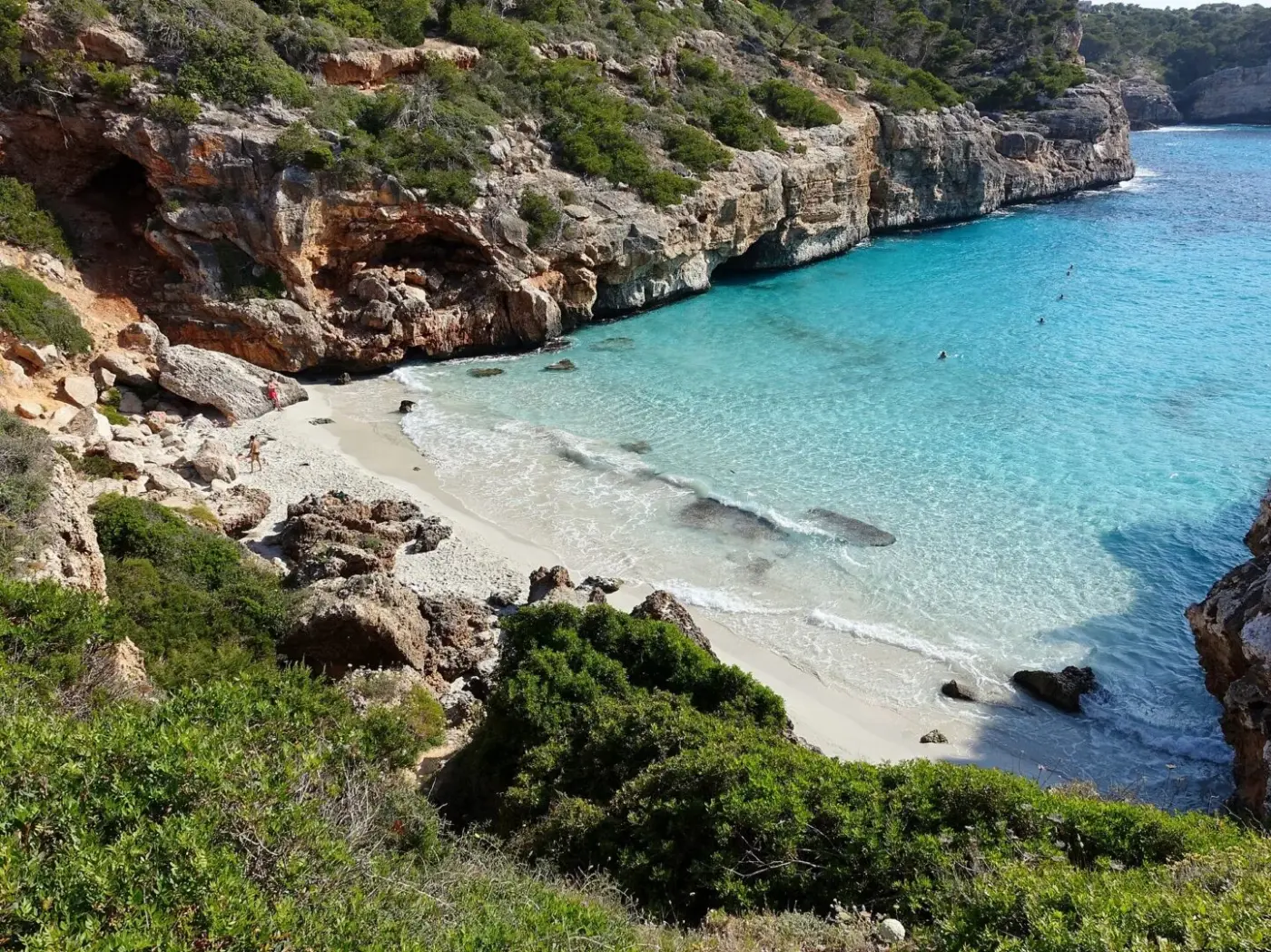
Mallorca has coves that, from land, mean a full car park and a half-hour walk, and from the sea mean turquoise water and room to drop anchor. In this guide I go through the best coves in Mallorca to reach by boat, grouped by area of the island, so you can choose depending on where you leave from and how much time you have.
Quick summary
- Half day from Palma or Puerto Portals: Portals Vells, Cala Falcó and El Toro island.
- Full day heading west: Sant Elm, Sa Dragonera and the Tramuntana coast.
- The most turquoise water: the south-east, from Es Trenc to Caló des Moro and Cala Mondragó.
- The most dramatic scenery: Sa Calobra, Torrent de Pareis and Formentor, in the north.
- Always: anchor on sand, never on posidonia seagrass, and pick the coast that is sheltered from the day’s wind.
South-west: the coves closest to Palma
If you leave from Palma or Puerto Portals, the Calvià coast is the easiest option: a short cruise takes you to several small coves, calm water for most of the summer and an islet that is perfect for snorkelling. It is the best area for a half-day trip.
Portals Vells
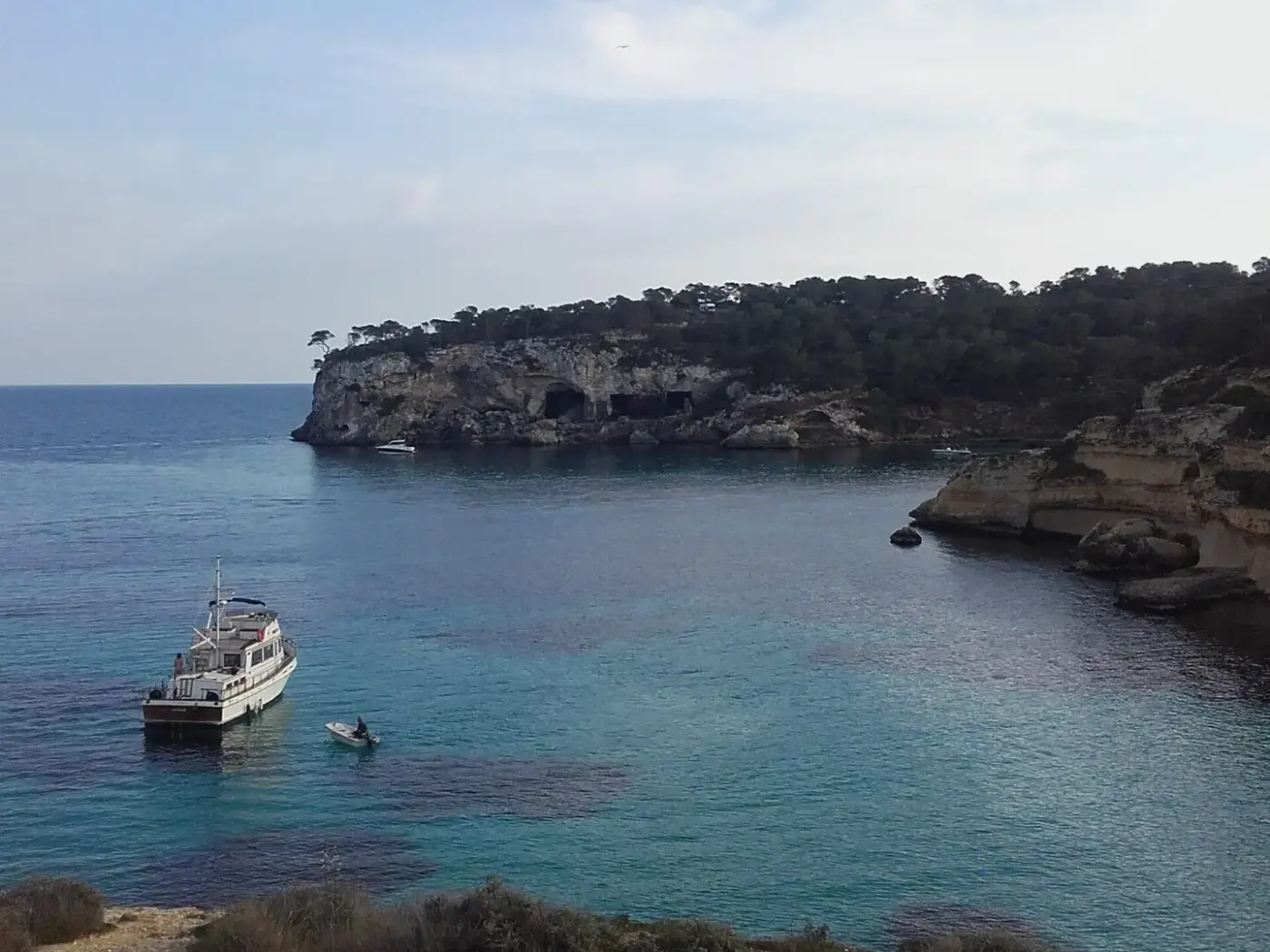
Three small sandy coves next to Cap de Cala Figuera, surrounded by pine forest. In the rock at the southern end there is an old carved cave with a small altar, which you can see very well from the boat. It is one of the most common stops on trips from Puerto Portals, so in July and August it pays to arrive early.
Best for: a first swim stop and lunch on board in calm water.
Cala Falcó
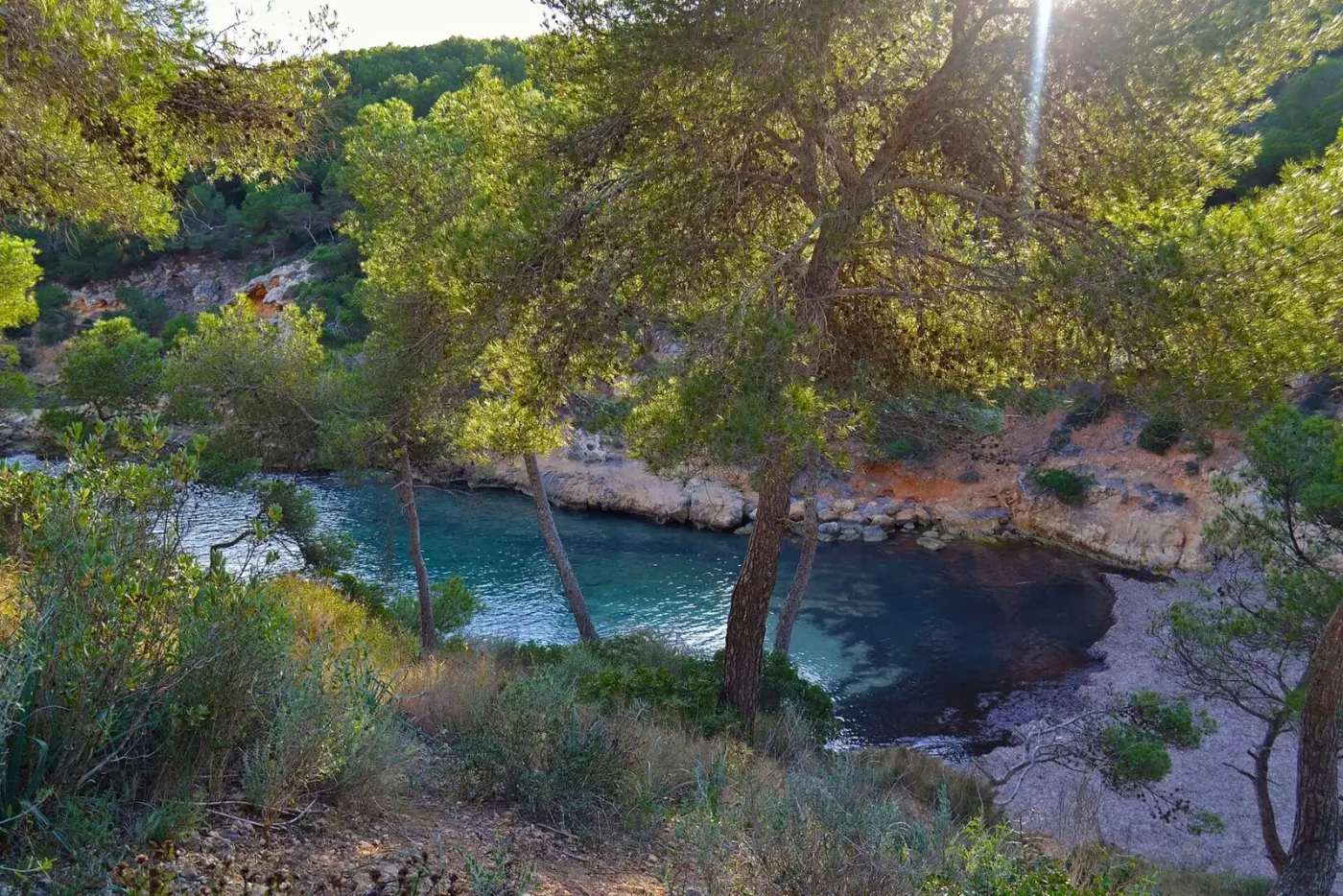
Very close to Portals Vells, this is a narrow cove between rocks, with turquoise water that stands out even in summer. It is small, so it works best with mid-sized boats or for a short swim before carrying on.
Best for: a quick swim and photos.
El Toro island
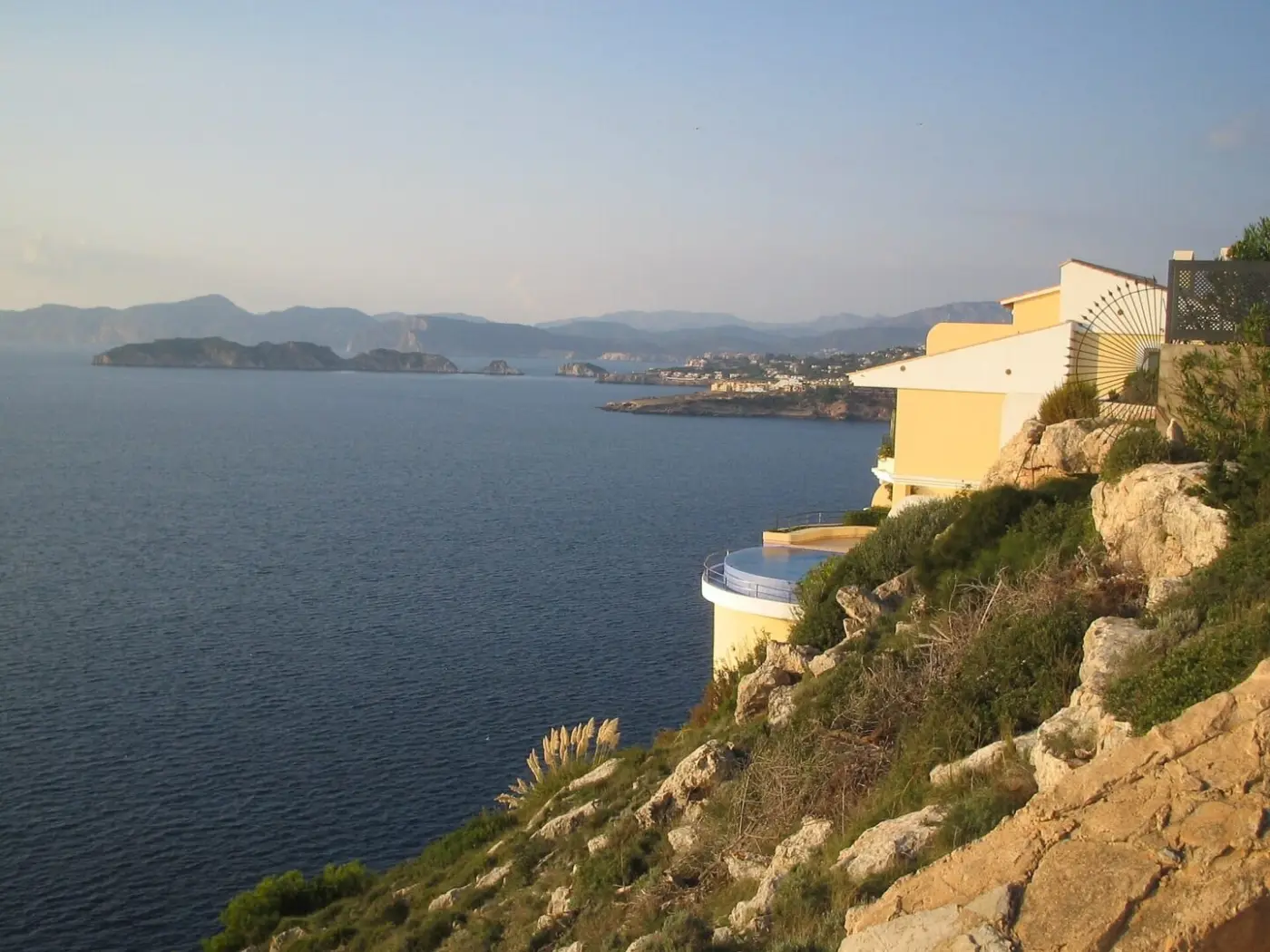
The islet of El Toro, opposite Port Adriano, is part of a marine reserve. That makes it one of the best places on the island to see fish while snorkelling from the boat. Inside the reserve there are rules on speed, fishing and diving, so let the skipper choose where to stop.
Best for: snorkelling and families with children.
West: Sant Elm, Sa Dragonera and the Tramuntana
Past Andratx the coast changes: cliffs, deep water and the outline of Sa Dragonera. From Palma it is a full-day trip, but it is worth it if you want wilder scenery.
Sant Elm and Sa Dragonera
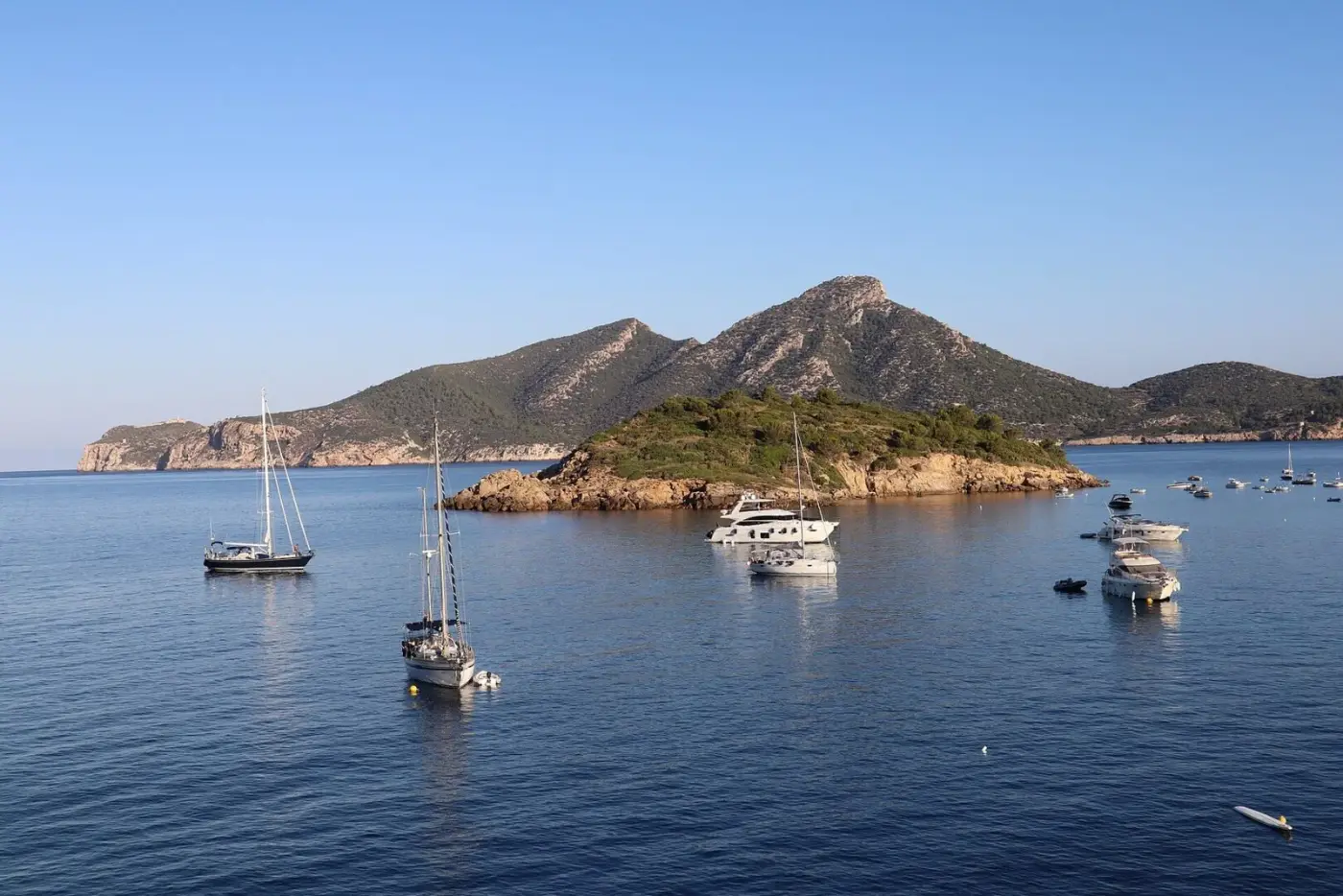
Sa Dragonera is a natural park, and the channel between the island and Sant Elm is one of the prettiest anchorages in the west. The area has a regulated mooring-buoy field to protect the posidonia, so instead of dropping anchor you tie up to the buoys provided. From here, if the sea is calm, you can carry on towards Sa Foradada and the Deià coast.
Best for: a full day, scenery and lunch on board with a view.
North: Sa Calobra and Formentor
The north coast is the most spectacular in Mallorca, with the Serra de Tramuntana dropping straight into the sea. It is also the most exposed to northerly winds, so it is only a good idea on calm days.
Sa Calobra and Torrent de Pareis
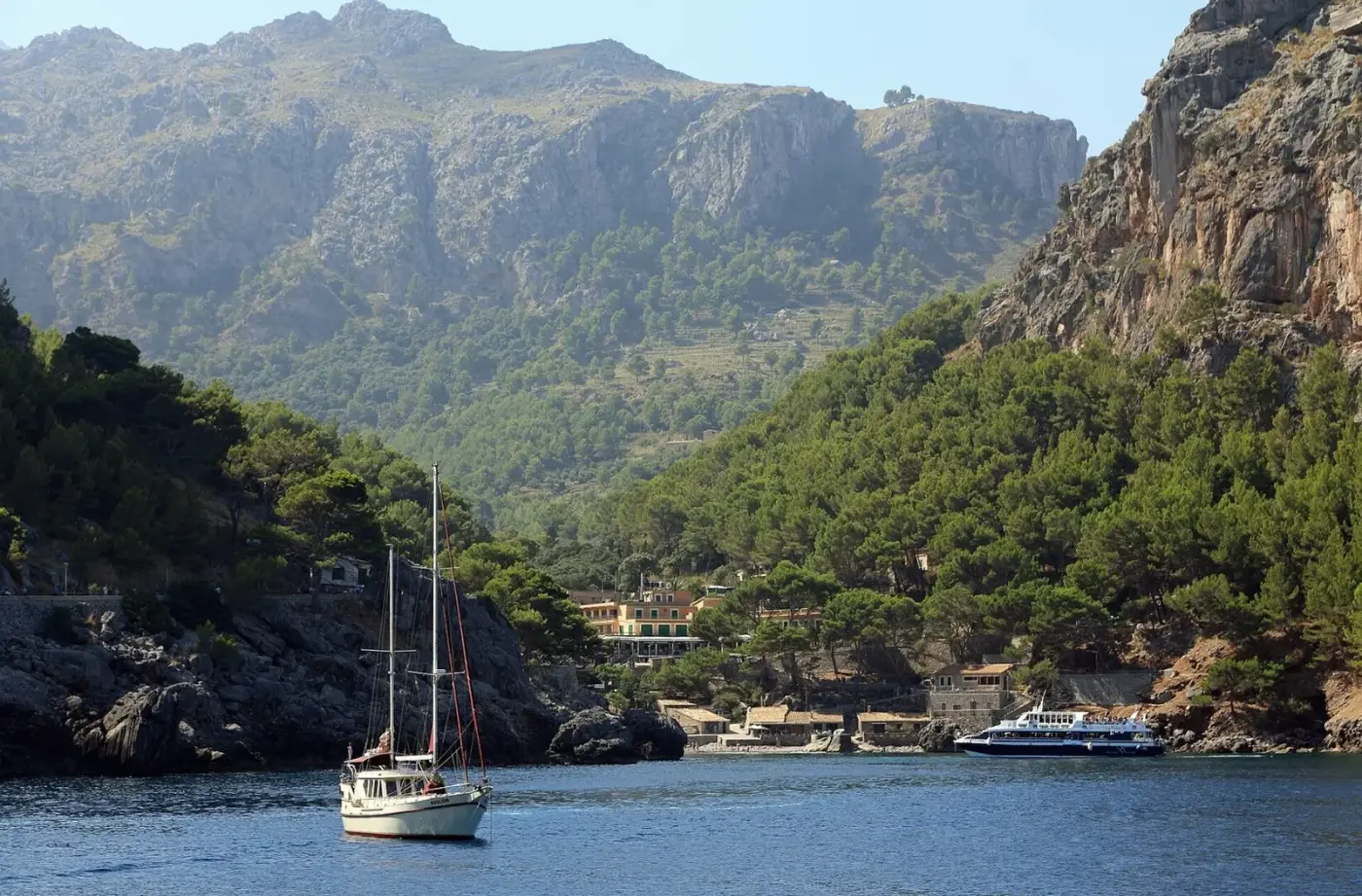
The Torrent de Pareis ends in a pebble beach between enormous rock walls. By road you get there on one of the island’s most famous winding roads; from the sea you get a much better sense of the scale of the landscape. From Palma it is a long passage, so it is usually planned as a full-day trip or from the ports in the north.
Best for: anyone who wants the most impressive scenery on the island.
Formentor

In the bay of Pollença, Formentor beach has white sand, pine trees down to the shore and very clear water. The bay is fairly sheltered, which makes it a good option in the north. Much of the seabed is posidonia meadow, so you need to look for the sandy patches to anchor.
Best for: a swim in calm water in the north of the island.
South-east: the turquoise coves
Between Colònia de Sant Jordi and Portocolom are the coves that appear in every photo of Mallorca. Many are hard to reach by land or fill up very early, and from a boat you enjoy them without queues or long walks.
Es Trenc and Es Carbó
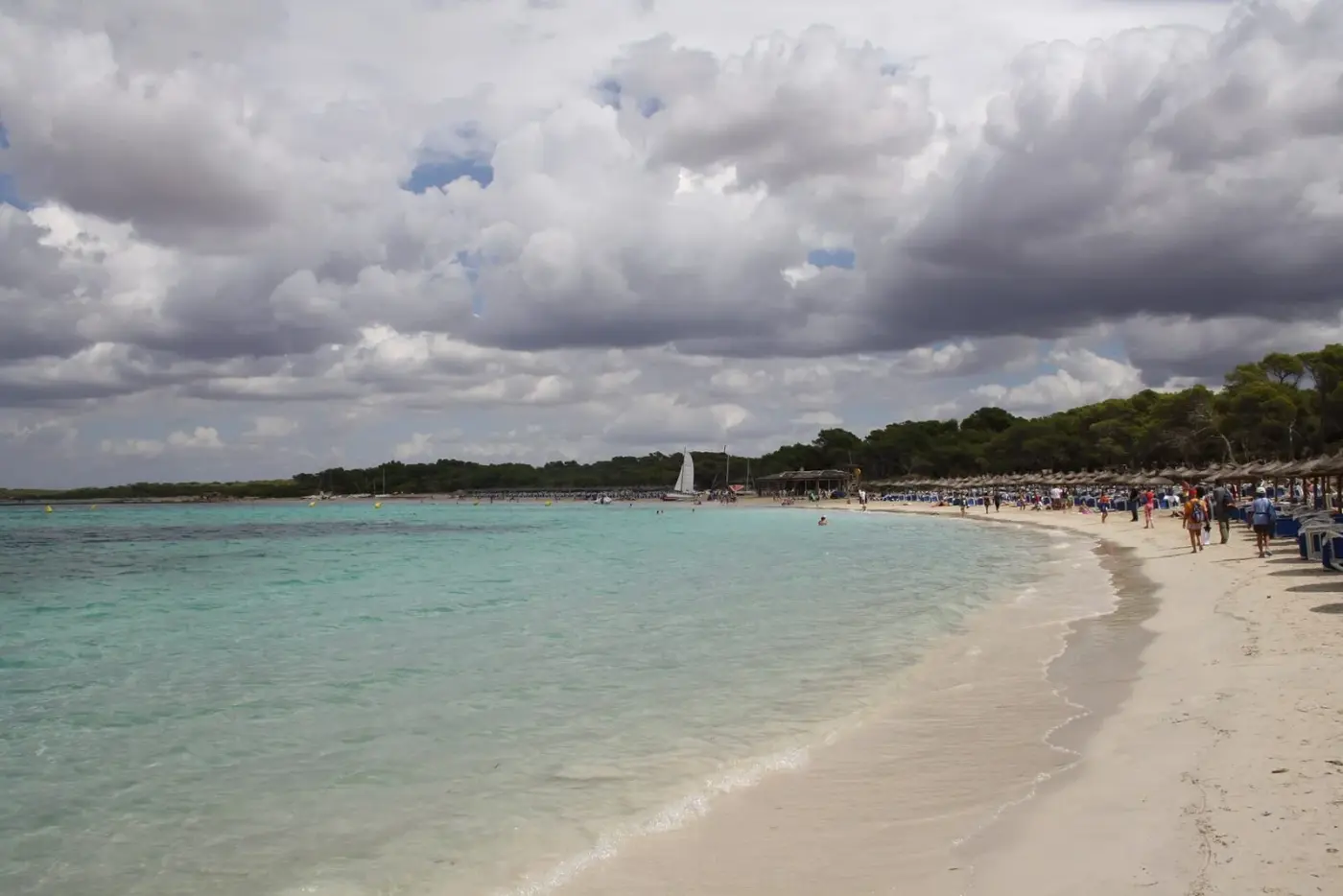
Es Trenc is one of the few long beaches in Mallorca with no buildings, just dunes and white sand. Next to it, Es Carbó is quieter, and you anchor off the islet of Na Moltona. From here you can also see Cabrera, which needs its own permit to sail to and moor at.
Best for: shallow water and Caribbean colours.
Caló des Moro and Cala s’Almunia
Caló des Moro is probably the most photographed cove in Mallorca. It is tiny, and in summer it fills with people who arrive on foot, so the best plan is to see it from the boat and swim in the cove next door, Cala s’Almunia, with its fishermen’s huts carved into the rock.
Best for: the classic Mallorca photo, without the crush of getting there by land.
Cala Màrmols
South of Santanyí, Cala Màrmols has no road access: you either walk a good while along the coast or arrive by boat. That is why it is usually much quieter than the neighbouring coves.
Best for: anyone looking for a cove without crowds.
Cala Mondragó
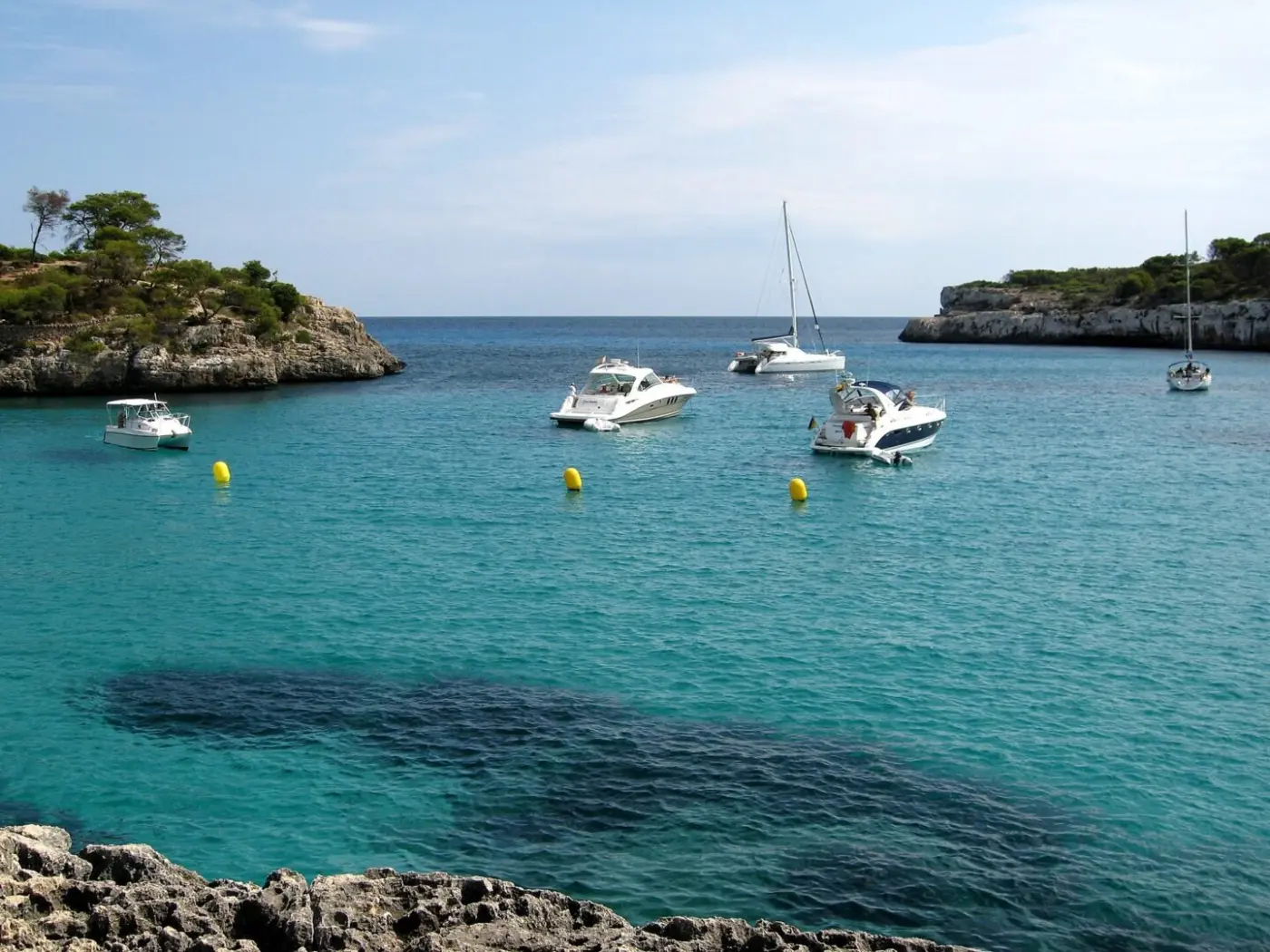
Inside the Mondragó natural park, this is a wide, sheltered cove with pine forest and very clear water. It works well on days with some northerly wind, when the north coast is not an option.
Best for: families and days with northerly wind.
Cala Varques
Between Portocristo and Portocolom, Cala Varques can only be reached on foot along a path or from the sea. It is an unspoilt sandy cove, with caves in the nearby cliffs that you can see very well from the water.
Best for: nature with no buildings in sight.
Before you go: posidonia, wind and timing
Always anchor on sand
In the Balearics it is, as a general rule, forbidden to anchor on posidonia, the seagrass that keeps the water so clear. You anchor on the sandy patches and, where there is a regulated buoy field, you tie up to a buoy. The Balearic government publishes a summary of the rules and the buoy fields (in Spanish). If you go out with a skipper, he takes care of this.
Choose the coast according to the wind
The rule of thumb is to look for the sheltered coast: with northerly wind, the south and south-west are better; with southerly wind, the bay of Pollença or the north coast. That is why the route for a day on the boat is decided the evening before or that same morning, looking at the forecast.
Arrive early
In July and August the best-known coves fill up with boats from midday. Leaving early, or saving the famous coves for the afternoon, when they empty out, makes all the difference.
Want to see these coves from the sea?
We have motorboats, yachts and catamarans in Mallorca, almost all with a skipper included, so you do not need a licence. Tell us your plan and we will suggest a route for the day.
Frequently asked questions
What is the best cove in Mallorca to visit by boat?
It depends on where you leave from and the day’s wind. For a half-day trip from Palma, Portals Vells and El Toro island; for turquoise water, the south-east, from Es Trenc to Cala Mondragó; for scenery, Sa Calobra and Formentor.
Do I need a licence to reach these coves?
Not if you rent the boat with a skipper: he drives the boat and chooses where to anchor. Most SeaTime boats in Mallorca go out with a skipper.
Can you anchor in any cove?
Only over sand or rock, never over posidonia. In some areas, such as Sa Dragonera, there are regulated buoy fields where you tie up to a buoy instead of anchoring.
When is the best time to go?
From June to September the water is warmest. May, June and September also have fewer boats in the best-known coves.